Botany is the
scientific study of plant life. As an integral branch of Biology—often referred
to as Plant Science or Plant Biology—it encompasses a diverse spectrum of
scientific disciplines dedicated to investigating the structure, growth,
reproduction, metabolism, development, and pathology of plants.
|
Why Botany Matters: Safeguarding Our Planet and Future
Botanists and Plant Ecologists are vital
protectors of our planetary biosphere. There exists extraordinary power in
these unique organisms, and human civilization could not endure without them.
Plants form the bedrock of global ecological balance, drive breakthroughs in
novel pharmacology and treatments for major diseases, and sustain our
agricultural backbone. In modern agriculture, botanical principles empower
farmers to apply optimized cultivation and planting techniques, maximizing
yield efficiency and long-term sustainability.
|
|
🌿 ACADEMIC EXCELLENCE & ECOLOGICAL
EXPLORATION
A Living, Breathing
Sanctuary of Plant Science
When you step into the Department of
Botany at Annada College, Hazaribagh, you aren't just entering a traditional
college block—you are entering a living, breathing sanctuary of Plant
Science.
Nestled in the ecologically vibrant
North Chotanagpur region, our department transforms the study of plant life
from flat textbook diagrams into a dynamic, hands-on scientific journey.
Led by a dedicated mentor Dr. Mina
Shrivastava (Head of Department), the Botany Department offers an immersive
4-year Bachelor of Science (B.Sc.) Major under Vinoba Bhave University (VBU).
Our department continuously inspires young brains to actively participate in
various kinds of interesting and befitting in-house research programs. It is
designed to inspire the next generation of plant explorers, ecologists,
environmentalists, microbiologists, taxonomists,
paleobotanists, entrepreneurs and
innovators.
|
|
🌱 Research Culture
Continuous in-house research programs
actively involving undergraduate minds in real botany investigations.
|
🔬 Modern Pedagogy
Bridging theoretical blueprints with
hands-on labs, 3D modeling, and field taxonomic identification.
|
🌏 Future Ready
Mentoring future plant explorers,
ecologists, taxonomists, paleobotanists, and bio-entrepreneurs.
|
HAND-HELD GUIDANCE: BRIDGING THEORY &
PRACTICAL MASTERY
Personalized, student-centric mentorship
ensuring no student is left behind in the lab or field.
|
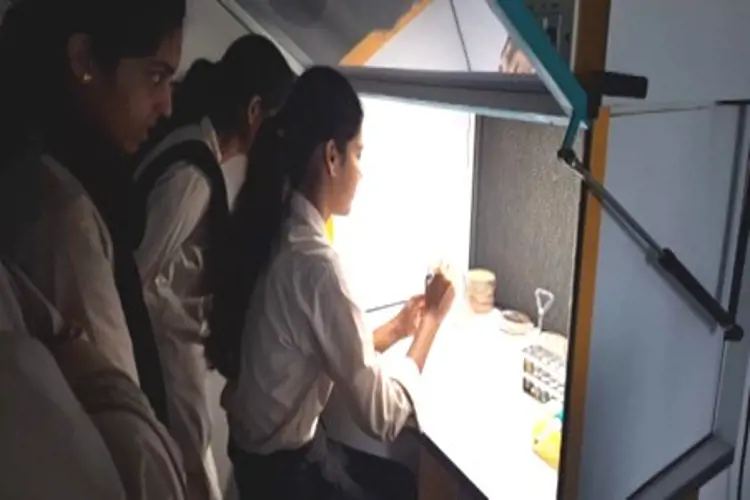
🔬 Microscopic
Blueprinting
Moving from textbook cell diagrams to
real-world observation. Faculty provide individual instructions on
high-resolution microscopes, mastering section-cutting, and applying precise
staining methods to locate plant tissues and plant chromosomes.
|
🧬 Demystifying
Molecular Concepts
Abstract theories like DNA replication,
plant genetics, and metabolic cycles (photosynthesis & cellular
respiration) are broken down using interactive digital tools, 3D models, and
simplified step-by-step illustrations before lab extraction.
|
|
📊 Biostatistics &
Data Interpretation
Research requires data precision. Faculty
sits down with students individually to guide them through statistical tools,
standard growth curve plotting, Mendelian cross ratio analysis, and
ecological experimentation metrics.
|
🌿 Herbarium &
Taxonomy Mentorship
De-stressing the International Code of
Nomenclature (ICN). Personal faculty guidance during field
preservation—teaching collection, pressing, mounting, and using taxonomic
keys to accurately identify indigenous flora.
|
|
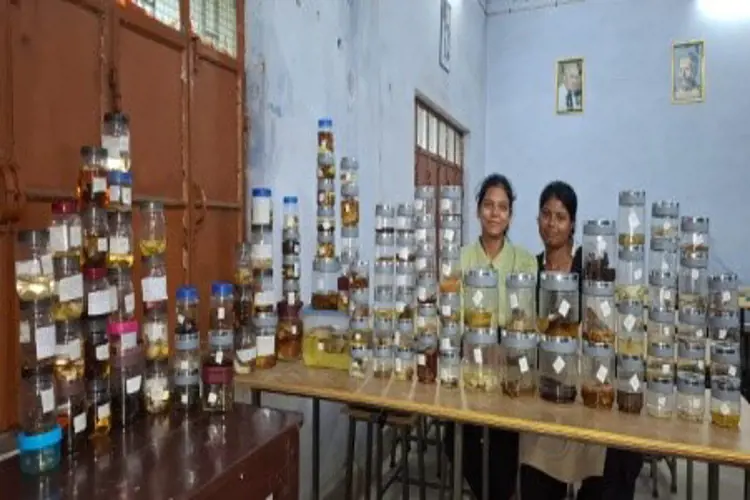
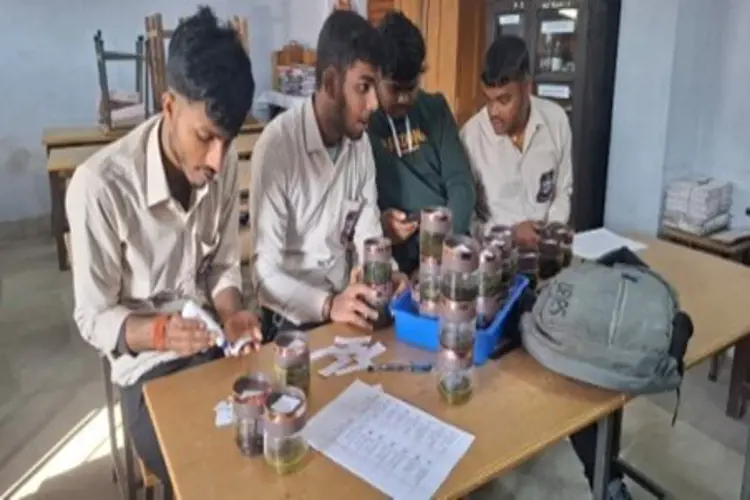
🍄 The Departmental
Fungarium (New Feature)
Our latest departmental asset: following
student dedication, an assembly of ~110 wild mushroom specimens collected
during the Monsoon of 2026 is curated and put on permanent educational
display.
|
🤝 Inclusive Mentorship
Philosophy
Fostering confidence across all learner
levels through step-by-step lab demonstrations, open Q&A sessions, and
customized support for competitive entrance and research aptitude.
|
THE DRIVING FORCE: DYNAMIC ROLE OF STUDENTS
Students are not passive listeners—they are
the heartbeat, planners, and primary executioners.
|
🏆 Student Council &
Event Leaders
Students take absolute ownership of the
department's annual calendar. From conceptualizing, budgeting, and managing
large-scale seminars to organizing corporate-style science exhibitions, they
gain invaluable project management and leadership experience.
|
🔬 Peer Mentors &
Lab Ambassadors
Senior undergraduate and research-track
students regularly mentor incoming batches. They assist in setting up complex
laboratory experiments, guiding juniors through microscope calibration, and
upholding rigorous laboratory safety protocols.
|
|
🛡️ Green Campaign
Managers & 'Green Police'
Through the Environmental Awareness Club
and Science Exploration & Innovation Club, botany students design
awareness posters, spearhead anti-plastic, anti-drug, and anti-corruption
campaigns, audit campus waste segregation, and organize community sapling
drives.
|
🗺️ Field Data Analysts
& Symposia Presenters
During expeditions, specialized student
units map regional biodiversity, curate specimens, analyze vegetative
densities, and deliver professional scientific presentations at
multi-departmental symposia.
|
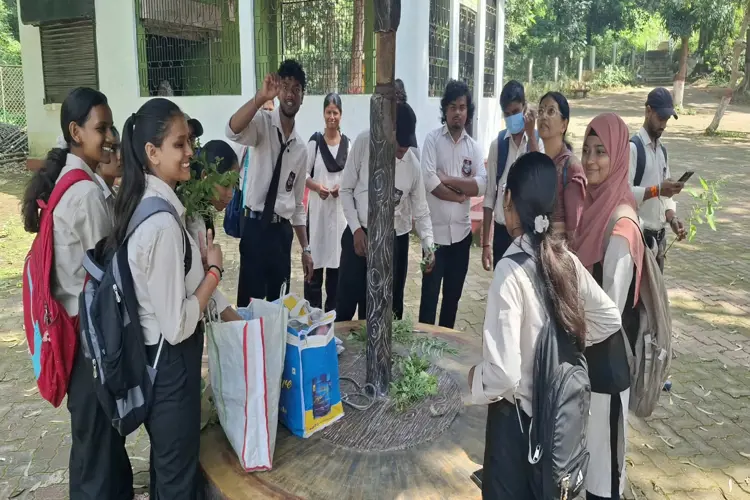
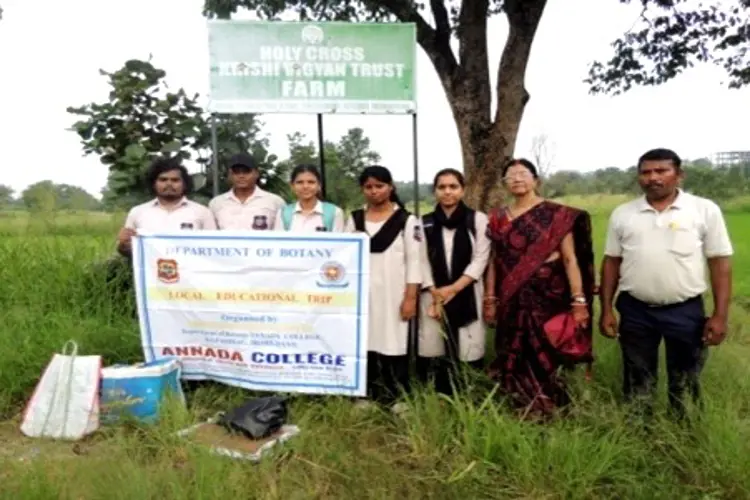
THE CLASSROOM WITHOUT WALLS: FIELD EXCURSIONS
& STUDY TOURS
Rigorous monthly & bimonthly
experiential field itineraries across Hazaribagh's rich ecological landscapes.
|
🌊 Wetland Biodiversity Surveys
|
Hazaribagh
Jheel (Lake)
|
Students trek to the iconic lake system to analyze aquatic
flora, microscopic algae, bio-indicators, and urban wetland dynamics.
|
|
⛰️
Monsoon Flora Expeditions
|
Canary
Hills
|
During rainy seasons, students catalog the rapid emergence of
ephemeral monsoon plants, pteridophytes, and distinct hill slope flora.
|
|
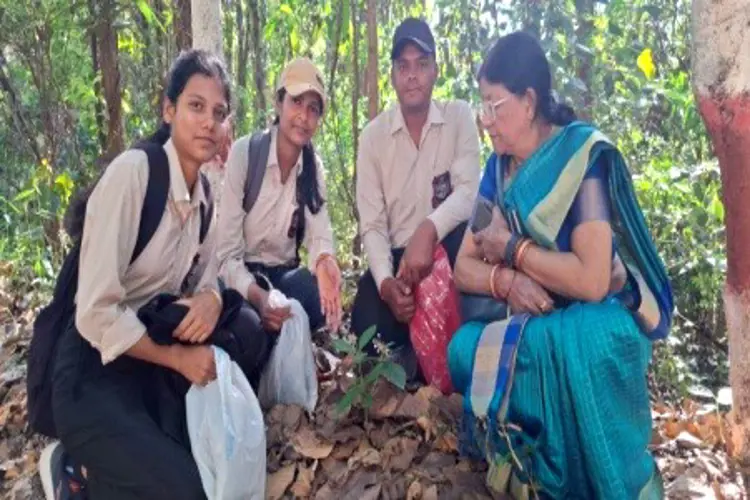
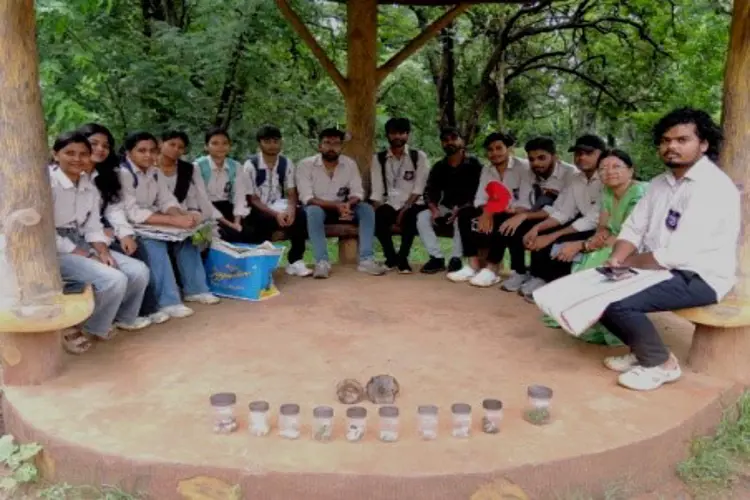
🍄 Macrofungi & Forest
Floor Surveys
|
Regional
Humid Belts
|
Bimonthly excursions focused on collecting, identifying, and
understanding the ecological role of wild mushroom species (leading to the
2026 Fungarium).
|
|
🌲 Phytosociological Forest
Studies
|
North
Chotanagpur Woodlands
|
Venturing into dense woodlands to map canopy stratification,
measure species density via quadrat sampling, and assess community
associations.
|
|
🪨 Paleobotany & Fossil
Investigations
|
Regional
Geological Formations
|
Rare field opportunities examining fossilized plant specimens,
deciphering prehistoric flora, and unlocking evolutionary biological
adaptations.
|
|
💧 Campus Water Quality Audits
|
Annada
College Campus Points
|
Hands-on scientific responsibility: water chemical analysis,
micro-contaminant testing, and conferral of the 'Water Inspector of Annada
College' Award.
|
Curriculum Structure & Core Syllabus
The curriculum
is thoughtfully mapped to balance foundational classical botany with modern
cutting-edge biotechnology and environmental governance:
|
Thematic Domain
|
Curricular Modules Covered
|
|
Microbiology & Lower Cryptogams
|
Microbiology, Phycology (Algae), Mycology (Fungi),
and Archegoniates (Bryophytes, Pteridophytes, Gymnosperms)
|
|
Plant Anatomy, Systematics & Diversity
|
Angiosperm Anatomy, Plant Systematics &
Taxonomy, Reproductive Biology of Angiosperms, and Phytogeography
|
|
Cellular & Molecular Biology
|
Biomolecules, Cytology (Cell Biology), Molecular
Biology, and Classical & Applied Genetics
|
|
Physiology, Metabolism & Breeding
|
Plant Physiology, Plant Metabolism, and Plant
Breeding
|
|
Applied Biotechnology & Environmental Management
|
Plant Biotechnology, Natural Resource Management,
Environmental Education, Waste Management, and Industrial Environmental
Education
|
Career Pathways & Professional Scope
A degree in
Botany unlocks vast multidisciplinary opportunities across governmental
research councils, forest services, environmental consultancies, agricultural
corporations, biotechnology firms, and green enterprises. Graduates can chart
successful careers across diverse profiles:
• Research & Pure Plant Sciences
· Plant
Explorer & Botanical Surveyor
· Plant
Biochemist & Molecular Biologist
· Plant
Geneticist & Plant Breeder
· Plant
Pathologist & Disease Diagnostic Specialist
· Taxonomist
& Herbarium Curator
· Paleobotanist
& Ethnobotanist
• Ecology, Conservation & Forestry
· Ecologist
& Field Conservationist
· Forest
Officer / Forest Ranger (State & Union Services)
· Forester
& Wildlife Habitat Manager
· Environmental
Consultant & Impact Assessor
· Natural
Resource & Waste Management Specialist
• Agriculture, Horticulture & Applied Industry
· Horticulturist
& Landscape Designer
· Agricultural
& Farming Consultant
· Commercial
Nursery Manager & Plant Propagator
· Professional
Florist & Floral Stylist
· Food
Technologist & Post-Harvest Quality Controller
· Industrial
Environmental Safety Officer